
A patient may forget the color of your walls or the furniture in your waiting room. But they may remember how they felt while they were there.
The relief of having a private place to ask a question they’d been nervous to bring up.
The ease of knowing exactly where to go after an appointment, without wandering through unfamiliar hallways.
The comfort of having a quiet, private space to process difficult news before returning to a busy waiting area.
These experiences may seem small, but they can shape how patients feel about their visit and even how likely they are to return.
And neuroscience helps us understand why.
Your Patients Are Constantly Responding to Their Surroundings
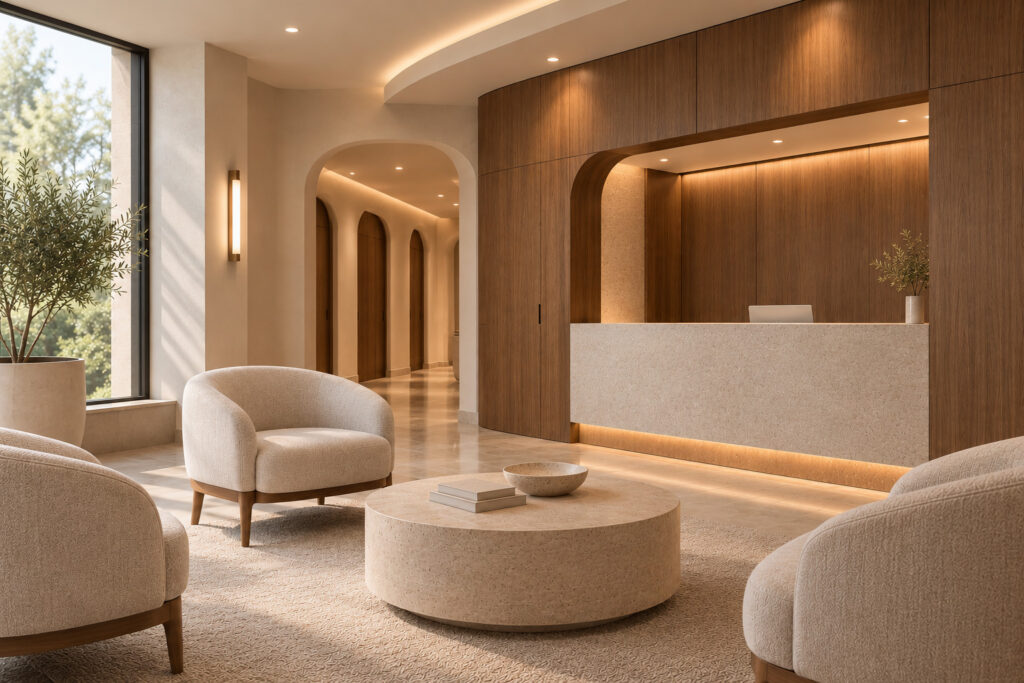
Our brains are always taking in information from the environment, even when we’re not consciously paying attention.
Sounds, lighting, movement, privacy, and the layout of a room can all influence how comfortable or alert we feel.
Think about the last time you were sitting somewhere unfamiliar and heard a door open behind you.
You probably turned around to see who was coming in.
Now imagine you’re a patient waiting for a medical procedure. You may already feel nervous or uncertain about what’s coming next.
If your treatment chair faces away from the entrance, every time someone enters, you would feel the need to turn around.
Something as simple as positioning that chair so patients can see who’s entering can give them a greater sense of awareness and control over their surroundings.
It’s a small design decision, but one that can make a meaningful difference in how someone experiences that room.
Privacy Can Influence How Comfortable Patients Feel Opening Up
Imagine a patient sitting in a consultation room, preparing to ask their doctor a deeply personal question.
But they can hear the conversation happening in the room next door.
Suddenly, they’re wondering whether someone else can hear them, too.
They may lower their voice, leave out important details, or decide not to ask the question at all.
Research on healthcare environments has explored how noise and privacy affect patient comfort, stress, and communication.
This is why privacy involves more than simply having a door that closes.
The placement of consultation rooms, the materials used in walls, and the way sound travels through a space can all influence how private a conversation feels.
When patients feel confident that their conversations won’t be overheard, it may be easier for them to speak openly.
The Moments Between Appointments Matter, Too
Some of the most vulnerable moments in a medical practice happen outside the treatment room.
Consider a patient who’s just received difficult news during a consultation.
They may need a few minutes to collect their thoughts before returning to the rest of their day.
But what happens when they leave that room?
If the only path out leads directly into a busy checkout area, they may suddenly find themselves surrounded by other patients, ringing phones, and conversations.
Now imagine a practice where there’s a quiet, private place to pause before moving into the public areas.
That space gives patients an opportunity to process what they’ve heard without feeling rushed or exposed.
The way rooms connect, where patients wait, and how they move through a practice can all influence these moments.
And they’re often decisions that need to be considered long before construction begins.
Bringing Neuroscience Into Medical Office Design
At Simour Design, we believe the physical environment should reflect the same care and attention that providers give their patients.
That’s why we consider how patients may experience each part of a practice, including the moments they may never realize were planned for them.
We look at privacy, sound, lighting, patient flow, and the relationship between spaces through the lens of both design and human experience.
We also take time to understand each provider’s unique approach to care.
A dermatology practice, surgical center, and wellness clinic may have very different patient needs. Their spaces should reflect those differences.
With more than 300 completed medical and wellness projects, our team brings these considerations together with brand identity, functionality, and long-term growth.
A thoughtfully designed medical space can communicate something meaningful to patients without anyone having to say it:
We thought about you before you ever walked through the door.
A thoughtfully designed practice becomes an extension of the person who created it. Every room, every detail, and every patient interaction can reflect your values and the kind of care you want your practice to be known for.