A quiet shift is happening in healthcare.
For decades, medical environments were designed around one goal: treatment.
Patients arrived with symptoms.
Clinicians diagnosed the issue.
The space existed simply to support that exchange.
But the conversation around health has changed.
Longevity science, biohacking, and preventative medicine have expanded the definition of care.
Today’s leaders in wellness are no longer focused solely on treating illness. They are focused on optimizing human performance, extending vitality, and supporting long-term health.
And that shift is transforming the environments where care takes place.
The next generation of healthcare environments won’t look like traditional clinics. They will look, feel, and function differently.
Because the goal is no longer just treatment.
It’s transformation.
From Clinical Spaces to Experiential Environments
Traditional healthcare environments were designed for efficiency.
Rooms were standardized.
Spaces were designed for treatment, not transformation.
Materials were selected for durability and compliance.
Function came first, and experience was rarely part of the equation.
But longevity-focused practices operate from a different philosophy. Their goal isn’t simply to process patients. It’s to create an environment that supports healing, recovery, and optimization.
That means the space itself becomes part of the experience.
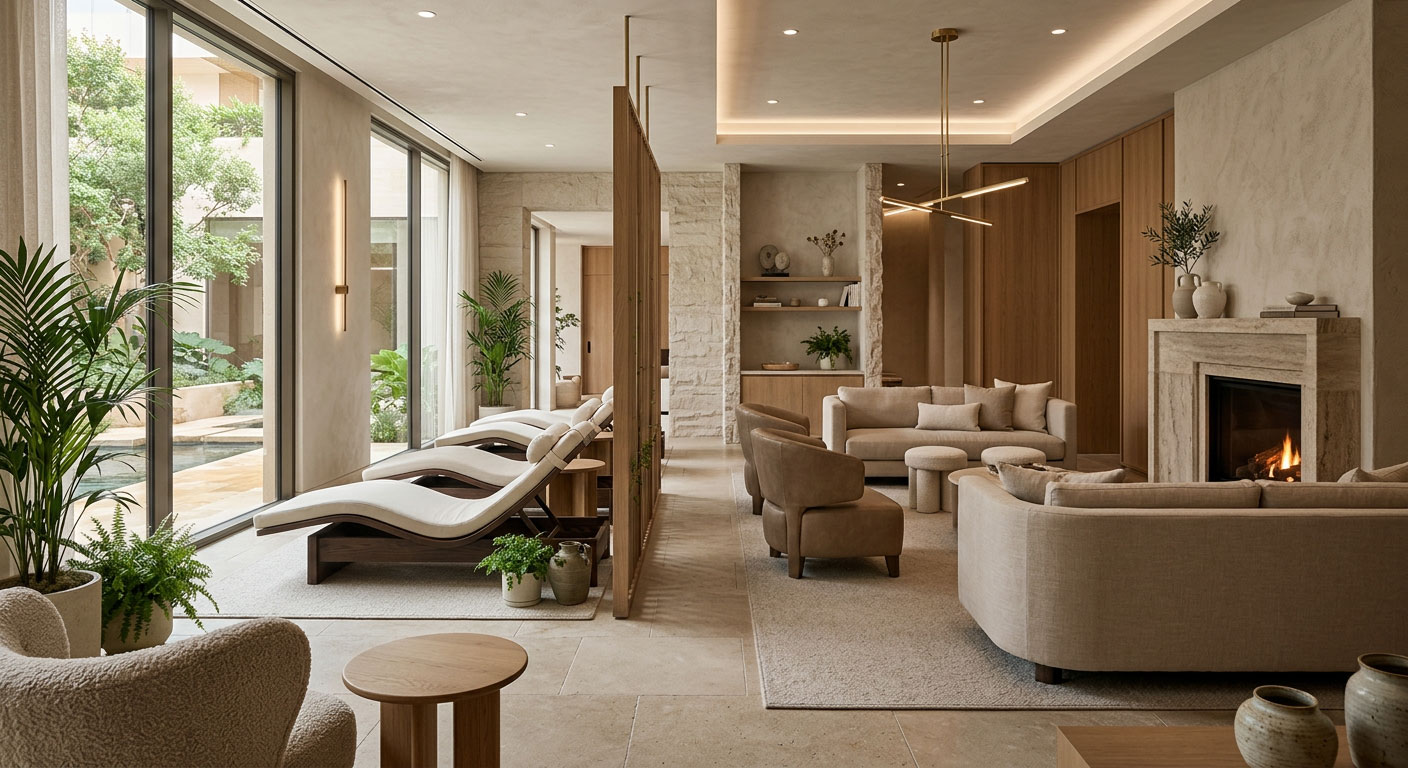
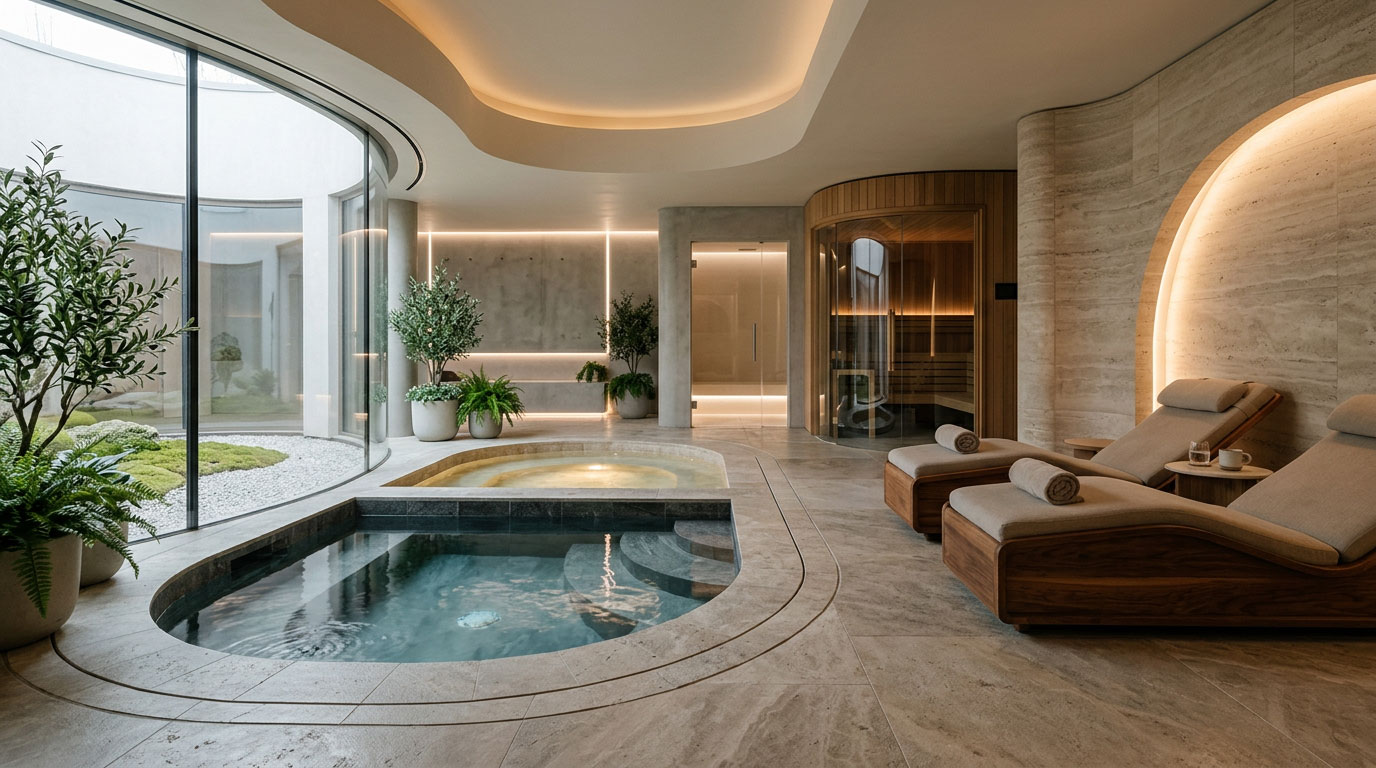
Instead of sterile waiting rooms and disconnected treatment areas, modern longevity centers are designed to guide people through a cohesive journey. From arrival to recovery, every moment is intentionally shaped to support the overall experience of care.
When done well, the environment communicates something immediately: this is a different kind of healthcare.
Why Environment Matters More Than Ever
Leaders in longevity medicine understand something many traditional healthcare environments overlooked:
The environment changes outcomes.
The way a space is designed influences how people feel the moment they walk in. It shapes emotional regulation, perceived trust, and overall comfort. It also affects how teams perform, collaborate, and deliver care.
In longevity centers, the environment is not just a backdrop for treatment. It becomes an active participant in the patient experience.
Layout, flow, materials, acoustics, and spatial sequencing all contribute to how the space functions. But more importantly, they contribute to how the space feels.
And in the world of preventative health and human optimization, that feeling matters.
The Rise of Wellness Destinations
As longevity-focused practices grow, many founders are thinking beyond the concept of a traditional clinic.
They are building wellness destinations.
These spaces often combine multiple services under one roof: advanced diagnostics, recovery therapies, functional medicine, performance optimization, and preventative care. Instead of isolated treatments, the goal is to create a comprehensive ecosystem for long-term health.
For patients, the experience becomes something more than a single appointment. It becomes a place they return to regularly, a place that supports their lifestyle and long-term wellbeing.
For founders and developers, this naturally shifts how these spaces are designed.
When multiple services coexist within one environment, cohesion becomes essential. The space must communicate one clear identity while supporting many different experiences.
Without a strong design strategy, these projects can quickly become fragmented. Different services may feel disconnected, and the overall experience loses clarity.
But when the environment is designed intentionally, everything works together. The space communicates a consistent standard, and the experience feels unified from start to finish.
Designing for the Future of Wellness
The most successful longevity centers begin with a simple understanding: the environment is not just a container for care.
It is a physical expression of the philosophy behind the practice.
That means design decisions move beyond aesthetics to support workflow, patient experience, operational flow, and the broader vision of the brand.
For leaders building flagship wellness projects, the goal is not simply to open another location. It is to establish a new standard.
These are the spaces that define the future of healthcare and wellness. The ones that patients remember. The ones that teams feel proud to work in. The ones that communicate a new vision of what health can look like.
Because the future of healthcare won’t be defined by treatments alone.
It will be defined by the environments where transformation happens.