A subtle shift is happening in healthcare.
For years, the focus has been on improving outcomes through better treatments, advanced technology, and refined protocols.
And while those advancements continue to move the industry forward, something else is beginning to surface.
An awareness that the environment itself plays a role long before treatment begins.
Because care doesn’t start in the consultation room.
It starts the moment someone walks through the door.
And in that moment, the body is already responding.
The Experience Before the Experience
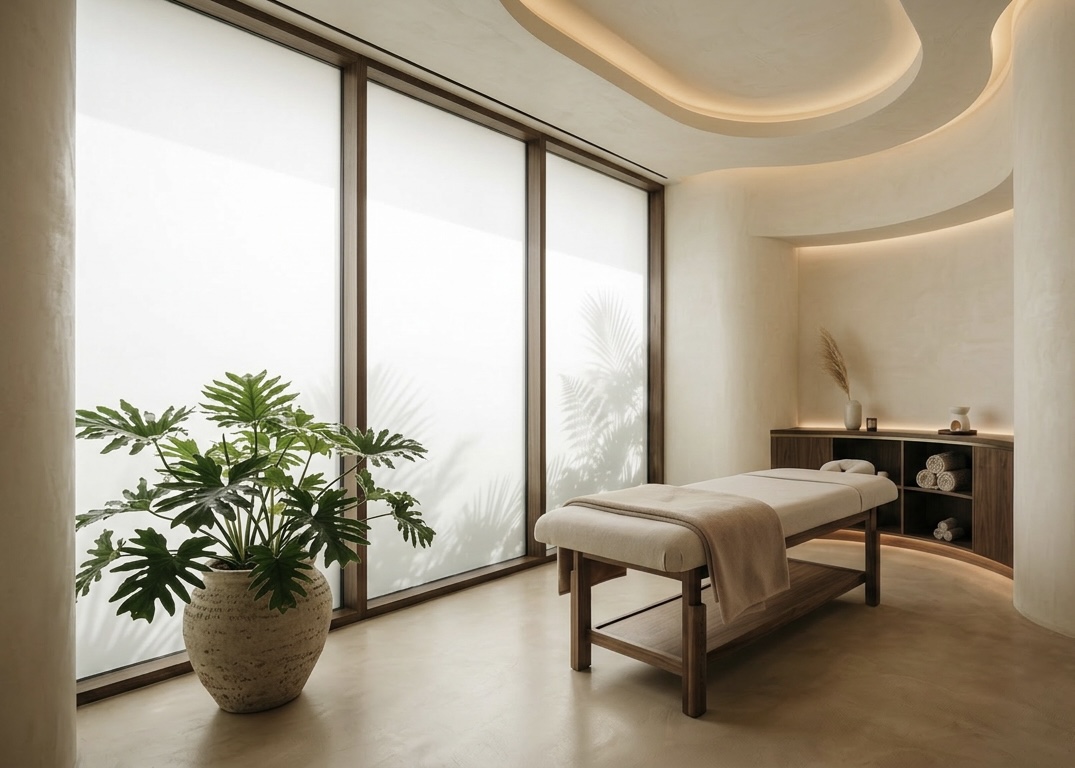
When a patient enters a space, their brain is not analyzing credentials or evaluating expertise.
It’s scanning for something more immediate.
Is this safe?
Can I relax here?
Do I feel at ease?
This happens automatically.
Not logically, but physiologically.
The nervous system processes light, sound, materials, spatial flow, and subtle environmental cues all at once. And within seconds, the body begins to shift in one of two directions.
Toward openness.
Or toward protection.
Most healthcare environments are not designed with this in mind.
They are designed for function.
But function alone does not determine how a space is experienced.
What the Nervous System Responds To
Designing for the nervous system means understanding that every element of a space is communicating with the body.
Light influences circadian rhythm and alertness.
Materials affect sensory comfort and perception.
Spatial flow impacts how the body moves and settles.
Sound shapes whether the environment feels calm or overstimulating.
Even subtle details matter.
The quality of the lighting.
The transitions between spaces.
The way textures feel.
The absence or presence of friction.
Each one influences how the body responds before the mind has time to explain it.
Because the body does not separate the environment from experience.
It responds to both as one.
Regulation Before Trust
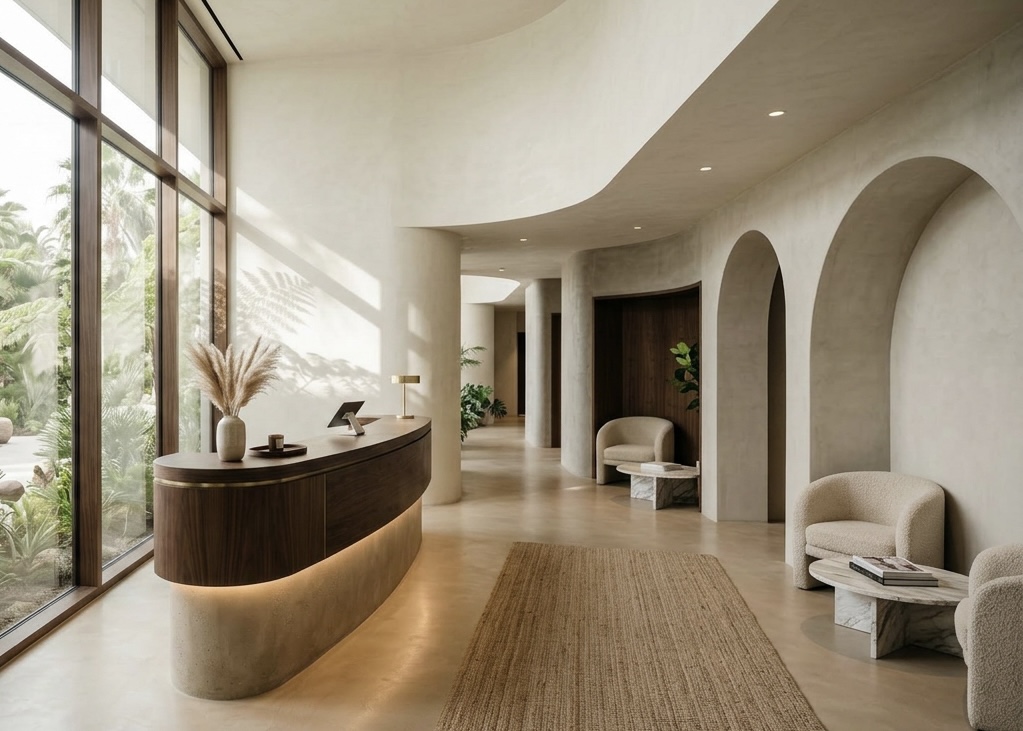
Much of healthcare design has historically focused on building trust.
But trust is not the first step.
Regulation is.
A regulated nervous system is what makes trust possible.
And in healthcare environments, where stress is often elevated, this plays an even greater role.
When the body feels at ease, the mind becomes more open.
More receptive.
More willing to engage.
When the environment creates tension, even subtly, the opposite happens.
The body stays guarded.
The mind becomes analytical.
The experience feels transactional rather than supportive.
This is why two practices offering the same level of care can feel completely different.
The difference is not always in the treatment.
It’s in how the environment allows the patient to receive it.
The Layer Most Practices Miss
Many modern healthcare spaces are thoughtfully designed.
They are clean.
They are functional.
They are visually appealing.
And yet, something still feels missing.
Because one layer was never fully considered…
How the space interacts with the nervous system.
Without this layer, environments may look refined, but feel neutral…or even slightly disconnected.
Patients may not be able to explain it.
But they feel it.
And that feeling shapes everything that follows.
Designing for Alignment
The next generation of healthcare environments is beginning to move differently.
Not just asking:
How should this space look?
But asking:
How should this space feel?
How should the body respond here?
What state should this environment support?
This shift changes how decisions are made.
It moves design beyond aesthetics into alignment.
Alignment between:
The environment
The experience
The deep level of care being delivered
When these elements work together, something becomes clear.
Nothing competes.
Nothing feels forced.
Everything supports the same outcome.
The Business Impact Few Talk About
Designing for the nervous system has a measurable impact.
When patients feel at ease:
They stay longer
They engage more openly
They follow through with care
They return
They refer others
Because people don’t just evaluate treatment.
They evaluate how it feels to receive it.
And that feeling begins before a single word is spoken.
The Future of Healthcare Environments
Healthcare is evolving.
Clinical excellence will always matter.
But it is no longer the only factor shaping patient decisions.
People are paying attention to how spaces make them feel.
How environments support them.
Whether the experience aligns with the level of care they are seeking.
The practices leading this next phase understand something deeper:
The environment is not separate from the care.
It is part of it.
And when designed with intention, it becomes one of the most powerful tools a practice has.
Not just to deliver care.
But to create an experience the body is ready to receive.
Because before anything is said…
Before treatment begins…
The nervous system has already decided how the experience will feel.