
There comes a point in the journey of many healthcare leaders when something begins to feel different.
From the outside, everything appears to be working. The practice is successful, patients are happy, the team is functioning well, and the business has grown. There isn’t necessarily a problem to solve, yet something no longer feels like a true reflection of who you’re becoming.
The environment that once felt aligned now feels ready for its next chapter.

Over the years, you’ve refined your philosophy of care. You’ve gained experience, developed greater confidence, and become more intentional about the impact you want your work to have.
The way you think about leadership has evolved.
The way you serve patients has evolved.
The experience you want people to have has evolved.
Then one day, you walk into the same practice you’ve walked into hundreds of times before, and it no longer feels like a reflection of who you’ve become.
The environment that once represented your vision now represents an earlier chapter of your journey. It reflects the version of you who was focused on opening the doors, building a patient base, and making the practice successful. Those decisions were exactly right for that season of life.
But growth has a way of changing what we notice.
As your vision expands, so does your awareness of the experience you’re creating. You begin paying attention to details that once seemed secondary. How patients feel when they arrive. Whether the environment creates a sense of calm or uncertainty. How your team moves through the day. Whether the space supports the standard of care you’ve worked so hard to build.
You begin to realize that your environment isn’t simply where your work happens. It’s quietly communicating your philosophy before a conversation ever begins.
This is one of the reasons the most visionary healthcare leaders don’t view design as a cosmetic update. They see it as an opportunity to bring every aspect of the practice into alignment with the level of care they’re committed to providing.
The practice they’re creating today carries a different standard. A different philosophy. A different level of intention than the one they started with years ago. Eventually, the environment deserves to evolve alongside it.
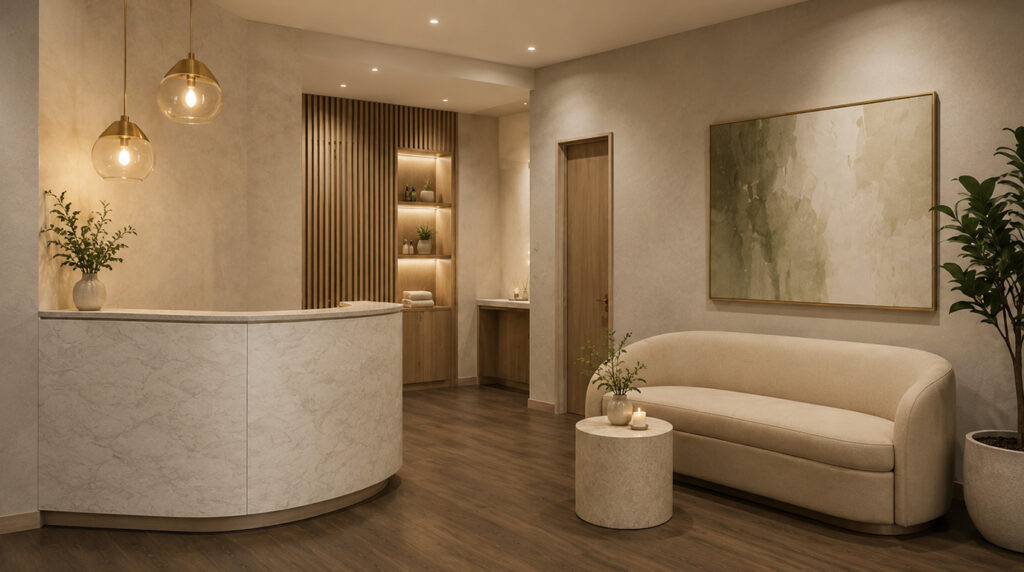
This is often the stage when our clients come to us at Simour.
They aren’t looking for someone to tell them what they want. They already have a remarkably clear vision. They know the experience they want patients to have. They know the culture they want to create for their team. They know the standard they want their practice to represent.
What they’re looking for is a design partner who understands that vision just as deeply as they do.
Someone who can see beyond finishes, furniture, and floor plans. Someone who understands that every design decision contributes to something much larger: the way people experience the practice every single day.
Our role is to translate that vision into a physical environment that reflects the leader you’ve become and the future you’re building toward. Every layout, material, transition, and touchpoint becomes an opportunity to reinforce your values, support your team, and elevate the patient experience.
When your environment aligns with your vision, patients feel it. Your team feels it. And perhaps most importantly, you feel it every time you walk through the door.
The environment becomes more than the place where your work happens. It becomes a reflection of your leadership, your philosophy, and the legacy you’re building.