
What if one of the biggest factors influencing patient retention had nothing to do with your treatment?
It comes down to something less visible…how trust is formed before care even begins.
And it begins the moment someone walks through your door.
Before your team says a word, the environment has already communicated something.
And the patient’s nervous system has already responded.
Whether to relax or stay guarded.
Whether to trust or remain skeptical.
Whether this feels aligned, or just another option.
These decisions don’t happen consciously.
But they shape everything that follows.
The practices that lead their markets understand this.
They don’t just design spaces that function.
They create environments where trust can form naturally.
Because trust is not only earned through care.
It is shaped by the environment where care happens.
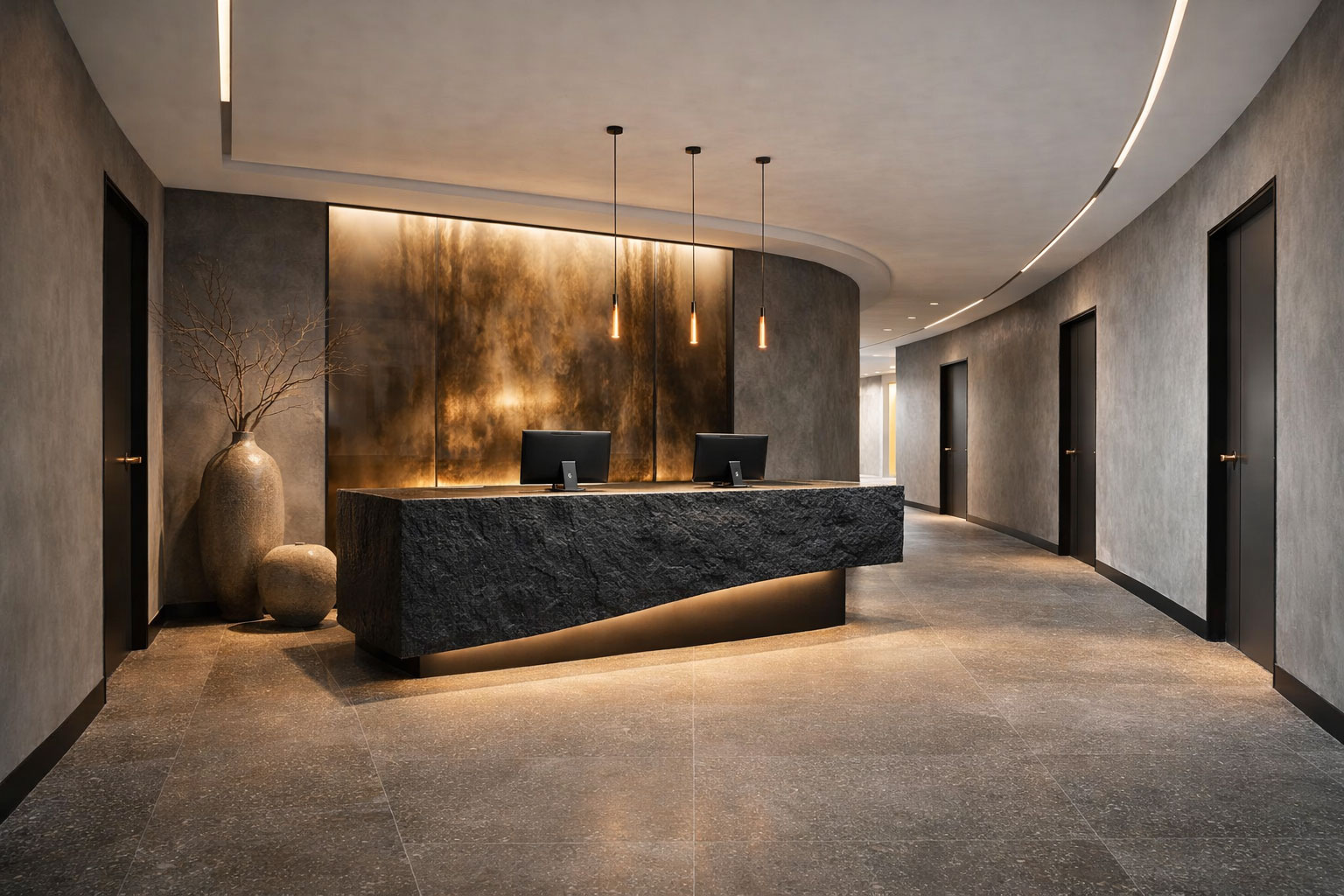
The First Impression Happens Instantly
Within seconds of entering a space, the brain begins processing.
Light. Materials. Layout. Sound. Air.
All at once.
Not logically, physiologically.
The nervous system is scanning for one thing:
Is this safe?
If the space feels cold, sterile, or disconnected, the body tightens.
The mind becomes more analytical. More guarded.
If the space feels intentional, calm, and coherent, something shifts.
The body relaxes.
The mind opens.
This is about regulation.
And when the nervous system is regulated, trust becomes available.
How Your Environment Communicates
Every space communicates on multiple levels at once.
1. Visual Coherence
What patients see forms their first internal story.
A cluttered reception desk, harsh overhead lighting, or mismatched finishes signal disorganization.
A clear entry, layered lighting, and cohesive materials signal intention.
When something feels off, even if no one can explain why, they simply don’t return.
2. Sensory Regulation
Beyond what’s seen, the body is responding to what’s felt.
Sound. Temperature. Texture. Air.
Harsh acoustics create tension.
Poor airflow creates subtle discomfort.
Warm materials, controlled sound, and comfortable physical environments create ease.
These physiological decisions directly influence how open or guarded someone feels in your space.
3. Energetic Alignment
This is the layer most practices miss.
The feeling of the space.
The presence it holds.
Whether it feels intentional…or forced.
Some spaces feel transactional.
Others feel aligned.
That difference comes from coherence.
When layout, flow, materials, and intention all move in the same direction, the space holds a different level of presence.
And patients feel it immediately.
Trust Is Built Through Movement
Trust is not created in a single moment.
From arrival to treatment, every step either reinforces alignment or introduces doubt.
The entry sets the tone.
The waiting space regulates the nervous system.
The transitions create ease or confusion.
The treatment space determines whether someone fully opens…or stays guarded.
When this journey is intentional, something shifts.
The experience feels seamless.
The environment feels supportive.
The patient feels held, without needing to explain why.
The Business Impact No One Talks About
This is not just about experience.
It directly shapes how a practice grows.
When trust is established early:
- Patients stay longer
- Treatment acceptance increases
- Referrals happen naturally
- Teams operate more effectively
- Premium positioning becomes possible
Because people don’t just evaluate care.
They evaluate how it feels to receive it.
And the environment plays a larger role in that than most realize.
Designing for Alignment
For leaders building or expanding a practice, this shifts how decisions are made.
It’s more intentional than simply choosing the best paint color.
It’s about how everything works together.
Every decision either supports alignment or creates friction.
And over time, that difference compounds.
The Future of Healthcare Environments
The conversation is shifting.
Clinical excellence will always matter.
But it is no longer the only factor.
Patients are paying attention to how care feels.
How the space supports them.
Whether the environment reflects the level of care being delivered.
The practices that lead this next phase understand something fundamental:
The environment is not separate from the care.
It is part of it.
And when designed with intention, it becomes one of the most powerful tools a practice has.
Not just to attract patients.
But to create trust, loyalty, and long-term impact.
Because before a single word is spoken…
The space has already spoken.