
There’s a version of your practice that checks every box.
And then there’s the version that changes everything.
Most people do not realize how different those two outcomes actually are when planning their next practice.
The Checklist Version
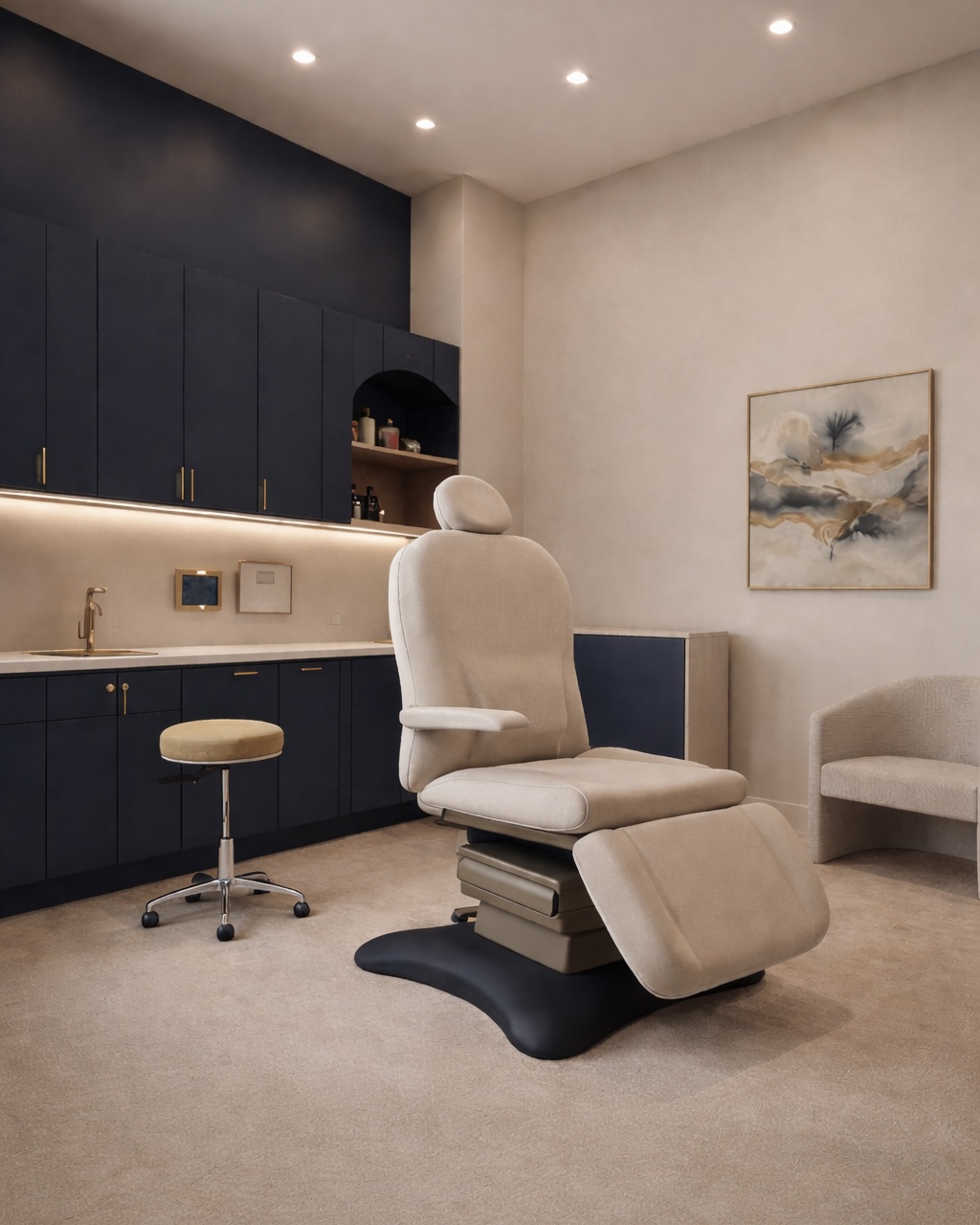
Design from a checklist and you will receive a checklist result.
Reception desk.
Waiting area.
Treatment rooms.
Staff space.
Everything is there. Everything functions.
And yet something essential is missing.
The soul.
Nothing is technically wrong. The lighting works. The finishes are beautiful. The layout is efficient. It photographs well.
But when patients leave, they do not carry the space with them.
It did its job. It simply did not leave an imprint.
Two Ways to Approach Design
There are fundamentally two ways to create a medical or wellness space.
Transactional design asks practical questions.
What do we need?
What will it cost?
When can it be completed?
It is efficient. Logical. Structured.
And it produces a space that works.
Intentional design begins somewhere deeper.
How do we want people to feel?
What experience are we shaping?
What must this space reflect about who we are?
It is aligned. Purposeful. Considered.
And it produces a space that resonates.
One approach focuses on completion.
The other focuses on meaning and impact.
Patients feel the difference immediately.
What “Forgettable” Really Means
Transactional spaces are often well executed.
But they feel like every other practice.
The lighting is adequate.
The materials are standard.
The layout is purely functional.
Patients walk in. Check in. Sit down. Move through their appointment. Leave.
There is no friction. But there is no emotional imprint either.
And in a competitive industry, blending in creates invisibility.
What Resonant Spaces Feel Like
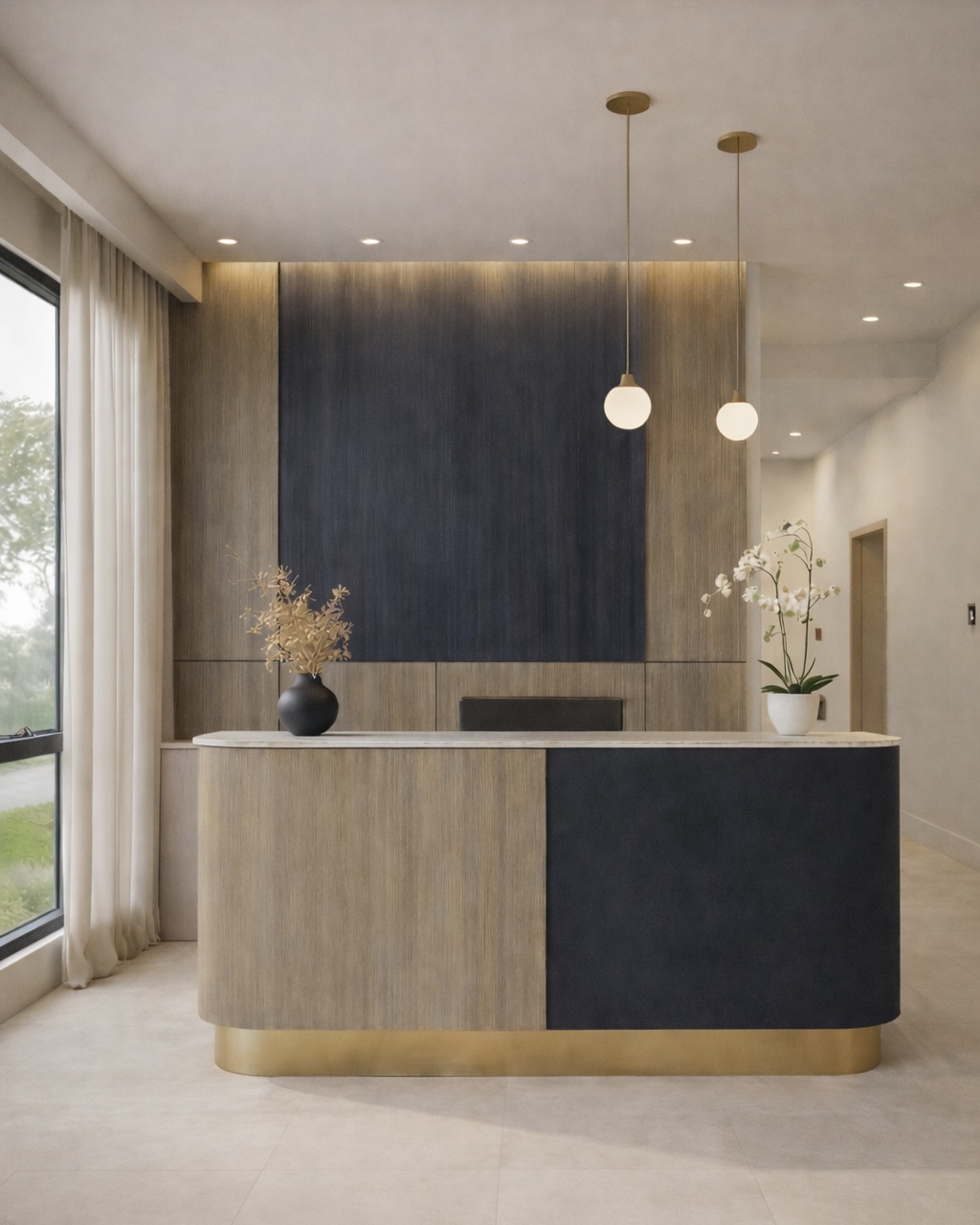
Intentional spaces feel grounded and considered.
The lighting mimics natural daylight, soft, warm, regulating, not the harsh fluorescent glare that triggers stress responses.
The materials are chosen for both longevity and sensory experience: surfaces that are easy to clean and maintain sterile standards, but also tactile, warm, and calming to the touch.
The layout supports both clinical performance and human presence. There is a flow that works for your team without sacrificing the patient’s sense of ease.
Everything communicates care before a word is spoken.
Patients walk in and exhale.
Teams feel supported rather than strained.
Leaders step inside and recognize the space as an extension of their standard.
The difference is subtle. And profound.
The Leadership Layer Most People Miss
Every practice is shaped by the mindset it was built in.
If it was built in urgency, it will carry urgency.
If it was built in pressure, it will reflect pressure.
If it was built in clarity, it will communicate clarity.
Space holds intention.
And intention reveals leadership.
Intentional design requires you to pause long enough to define what you are truly building. Not just services and schedules. But experience. Culture. Standards.
Before floor plans. Before finishes. Before budgets.
Clarity first.
Then design.
The Ripple Effect
When a space is designed with intention, the impact extends far beyond aesthetics.
Patients sense it. They return. They refer. They trust more deeply.
Teams thrive in environments that were created to support their wellbeing, not simply accommodate their workload.
And as a leader, you feel anchored by a space that reinforces your vision rather than draining your energy.
Transactional design gives you function.
Intentional design gives you longevity.
The Real Question
The real question is not what you are building.
It is who you are building it as.
Are you designing from pressure or from vision?
Are you completing a project or shaping an experience?
Are you creating a space that works or one that reflects your standard?
When the mindset shifts, everything else follows.
At Simour, we do not begin with floor plans.
We begin with clarity.
Before we talk about finishes or furniture, we ask you to describe the experience you want your patients to have. What you want them to feel. How you want your space to reflect the care you provide.
Then we translate that vision into a design strategy that embodies it.
Because your work deserves a space that reflects its depth.